Trends in Freelancing
The 9-Month Hire Is Outdated. Here's What CHROs Are Doing Instead.
Written by: Flexing It
21/05/2026
5 minutes read
![eye]() 68
68
![share]() 0shares
0shares
Last quarter, a CHRO I've known for years called me with a problem her board had just handed her: set up an AI function across three business units, in six months, without adding two permanent VPs to headcount. The old playbook would have eaten the first four months of that timeline on search alone.
She didn't run the old playbook. She scoped three outcomes, hired three senior domain experts on 6-9 month engagements, and had execution live in week three. By month four, she knew which one of those three the business actually wanted to convert to permanent, and which one was a problem her team could now own internally.
That call is not unusual anymore. It is the pattern.
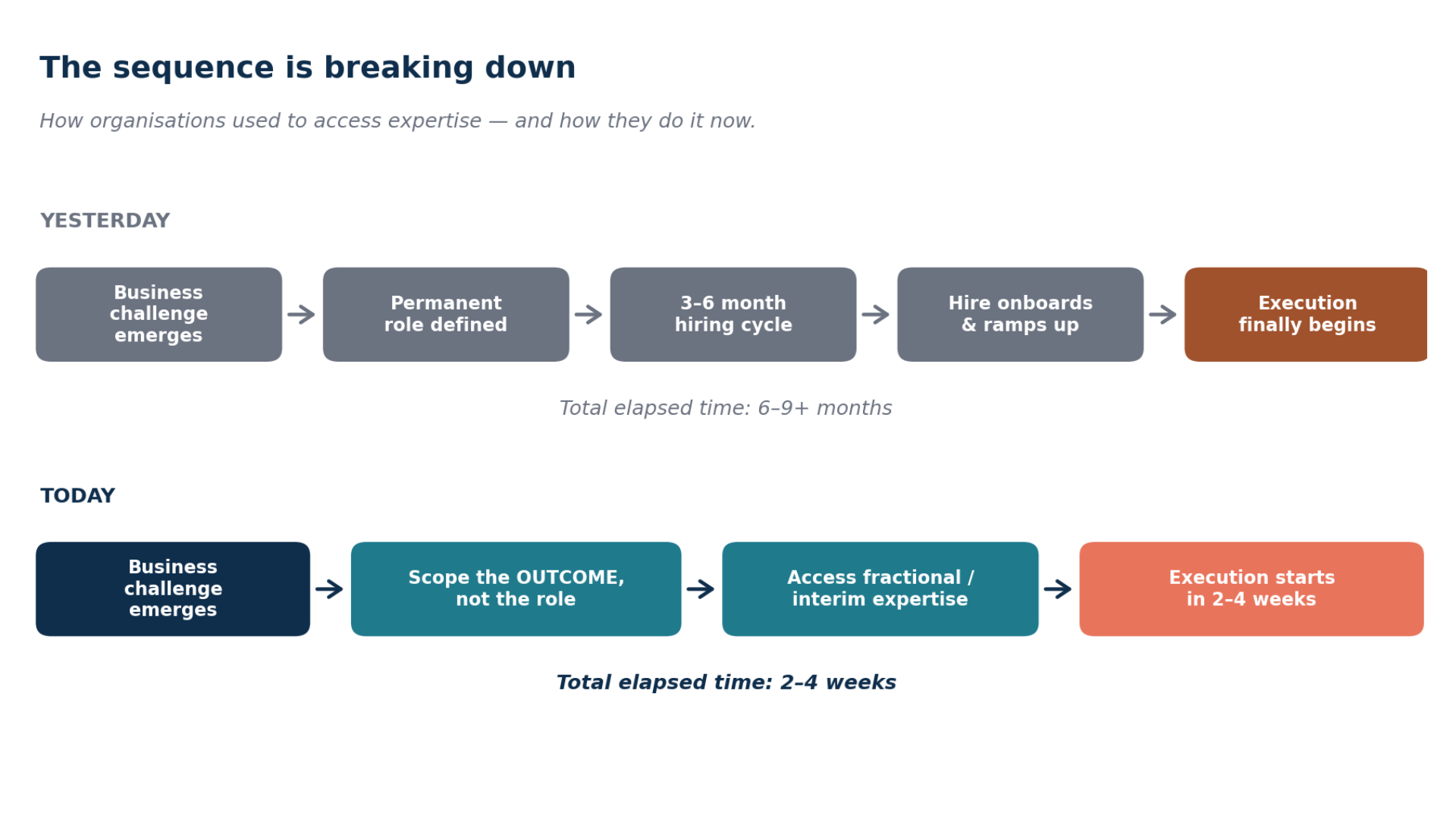
The sequence we were all trained on is breaking
For most of the last twenty years, the order of operations inside a large organisation was almost identical regardless of geography or sector. A business problem appeared. A role was scoped. A search began. Four to six months later, someone joined. They onboarded. They built relationships. They earned the right to act. And only then did real execution begin.
That order made sense in an environment where strategy cycles were measured in years, and the cost of a wrong hire was higher than the cost of a slow one. Both of those assumptions have flipped. Strategy cycles now run quarter by quarter, sometimes month by month especially for AI adoption. And the cost of arriving late to a transformation moment is, increasingly, the transformation itself.
What CHROs are actually buying now
When we look at what senior consultants on our platform are being hired to do this year, the picture is sharper than I expected when we started Flexing It in 2012.
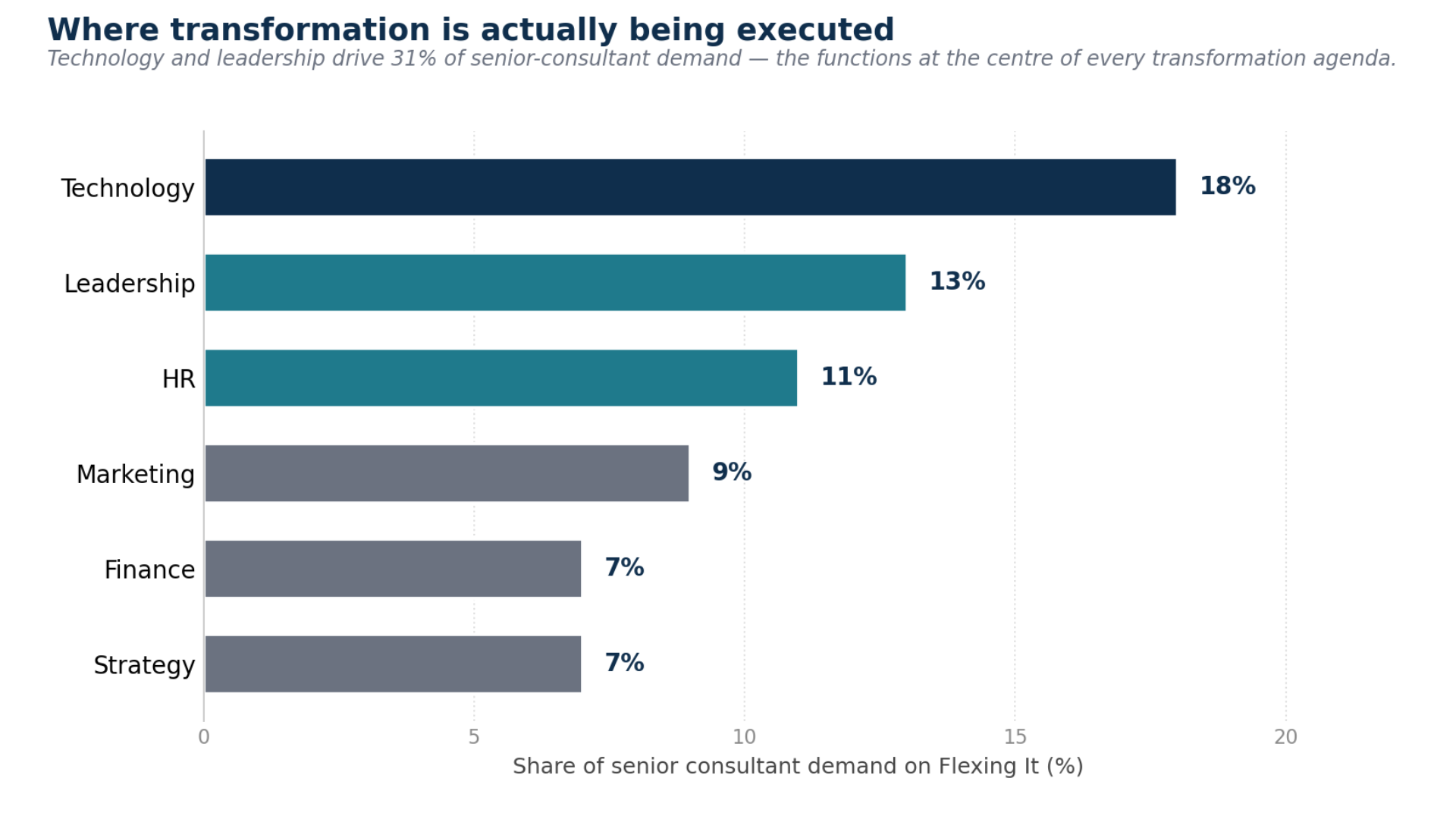
Technology is the biggest single function, at 18% of demand. That part is not surprising. What is surprising is that leadership itself comes in second at 13%. Organisations are not just renting execution hands. They are focusing on judgment, interim CHROs, transformation directors, and business unit GMs brought in for nine to fifteen months to carry a specific outcome over the line.
HR is at 11%, marketing at 9%, finance and strategy at 7% each. Read across those numbers, and the story is consistent: the functions that sit closest to transformation are the ones being staffed flexibly. The functions still being hired permanently are the ones running steady-state operations.
More insights covered in our FY26 Annual Report
This is not about commitment. It is about speed.
The most common misread I hear from peers is that this trend signals organisations want less commitment from leadership. It does not. The companies I see using interim talent best are deeply committed to their permanent teams. They are using fractional capacity to protect those teams from problems the permanent team cannot solve in time.
A bank stabilising governance before a fundraise does not need a five-year CFO hire. It needs a sixty-something former group CFO who has done the same thing four times before, available next week. A manufacturer rolling out an AI quality system across twelve plants does not need a permanent VP of AI. It needs an operator who can build the playbook, train the team, and hand the keys over in nine months.
Not every nine-month problem deserves a nine-year hire.
The supply side has finally caught up
This shift would have stalled five years ago for a simple reason: the talent wasn't there in the volume or seniority CHROs needed. That has changed.
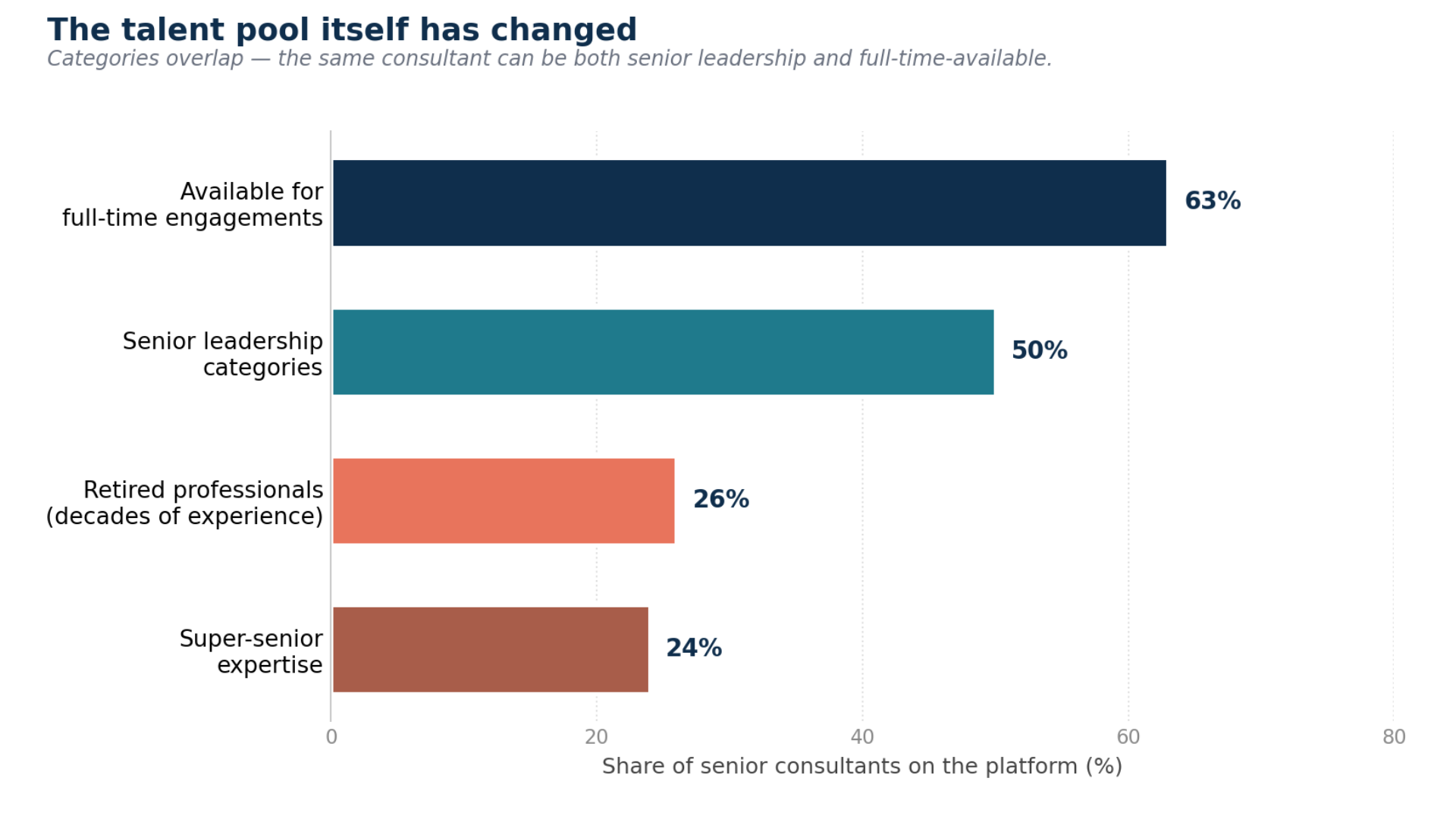
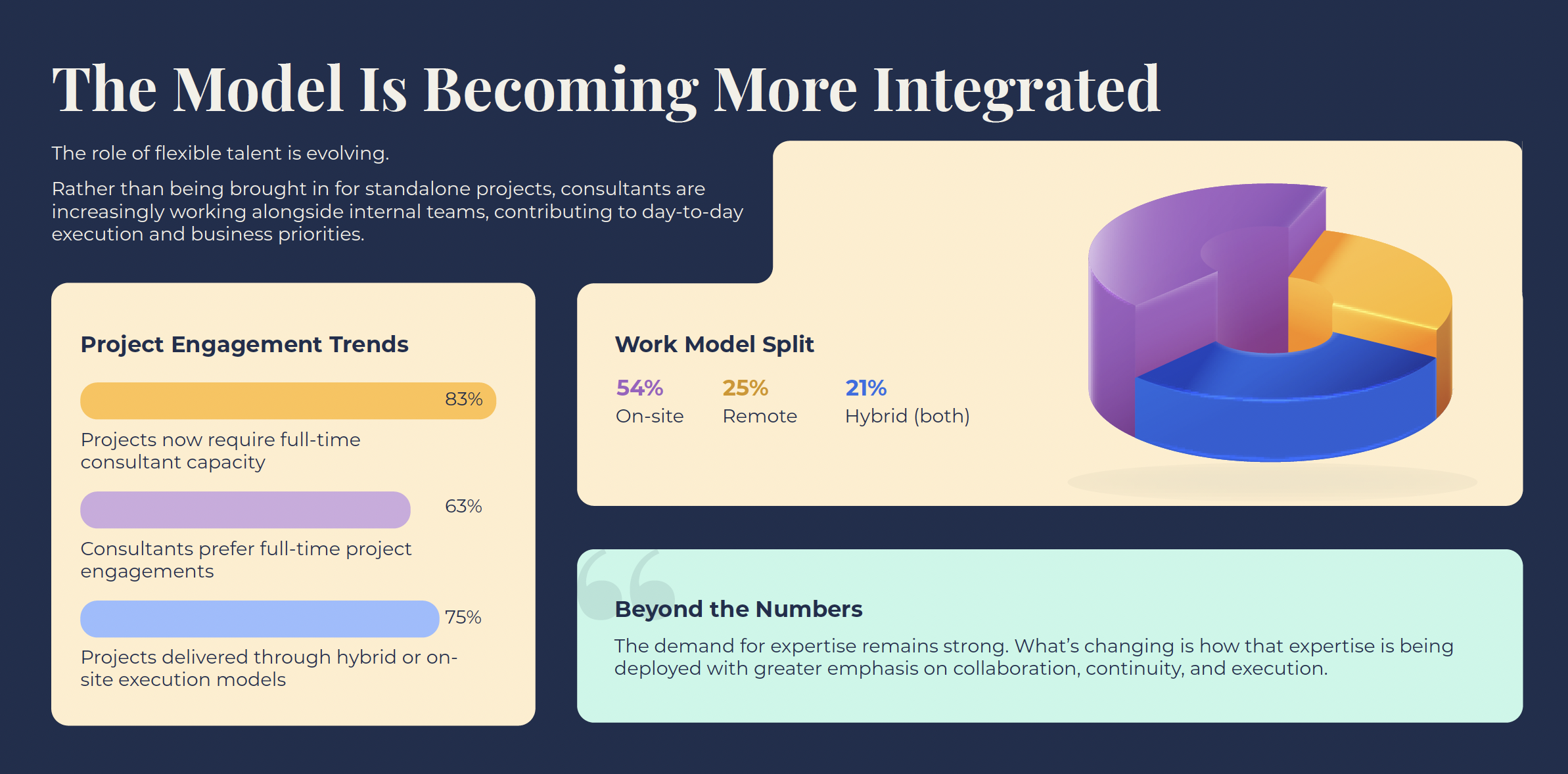
63% of senior consultants on our platform are now available for full-time engagements, a number that would have been closer to a third when we launched. Half sit in senior leadership categories. One in four is what we'd call super-senior, former C-suite executives. And another quarter are experienced retired professionals bringing two or three decades of operating context that no permanent hire under fifty is going to replicate.
These categories overlap, which is the whole point: the same person can be a former CFO, available for a six-month full-time mandate, and three years into a portfolio career. That combination didn't exist at this scale a decade ago. It does now.
What I'd ask if I were a CHRO this week
If your strategy meeting in the next two weeks includes the phrase "we need to hire a head of X to do Y," pause and run two questions:
- Is Y a steady-state mandate that will exist in three years? Or is it a transformation moment that will look completely different in eighteen months?
- Could we get to a measurable outcome in two-thirds the time if we accessed the expertise instead of hiring it, and then converted the seat to permanent once we knew what shape it should be?
The CHROs I see moving fastest right now are not the ones hiring the most. They are the ones who have stopped treating the permanent hire as the default answer and started treating it as the answer they make once they know what the question is.
Chandrika Pasricha is the Founder & CEO of Flexing It, Asia's leading marketplace for on-demand executive and consulting talent across 15 countries. She has spent the last 13 years watching what senior people get hired to do — and increasingly, not hired to do.


 `
`  68
68
 0shares