Trends in Freelancing
Current Recruiting Trends: 6 Shifts Every Business Leader Should Know
Written by: Flexing It
14/07/2026
8 minutes read
![eye]() 52
52
![share]() 0shares
0shares
We are pleased to share Flexing It’s State of On-Demand Talent FY26 report - an annual snapshot of how organisations are accessing expertise, where demand is shifting, and what that may tell us about the changing structure of work.
This year’s report draws on projects and talent trends across sectors, offering a closer look at how businesses are responding to growth, transformation, and capability gaps in real time.
Access the full report
There was a time when full-time hiring was the answer to most business and manpower needs. If companies needed capability, they built it - more people, more teams, more layers.
That model still has its place. But it no longer captures the full architecture of capability.
Our report points to a steady shift in talent strategy: bringing in specialised expertise where the pressure is highest, the timelines shortest, and the value most immediate.
The shape of change
A few figures stand out:
- 60% rise in project demand over two years
- 10% of all mandates now have an AI component
- 61% growth in supply-chain demand
- 35% of consultant deployments involve senior professionals
- 75% growth in consultant registrations over FY24
Taken together, they hint at a broader rewiring of how work is assembled.
Less by fixed design, and more by immediate need.
What stood out in FY26
1. The Cost of Waiting
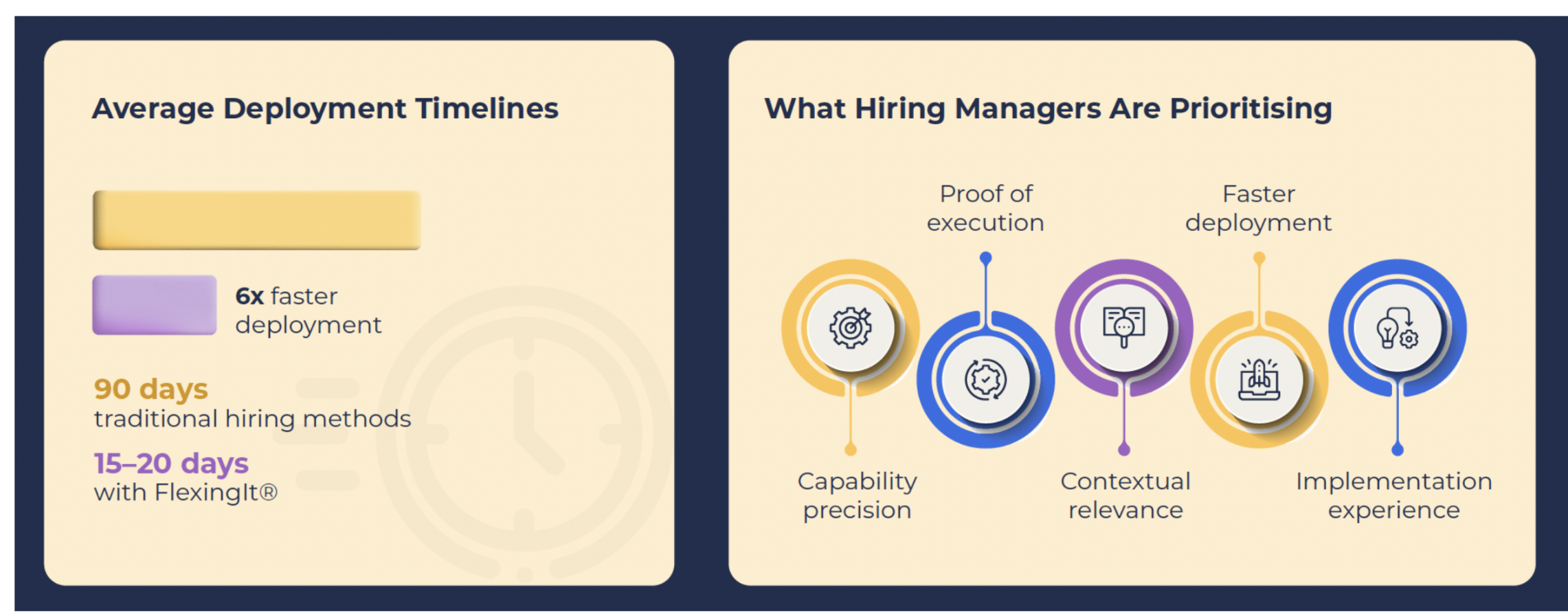
- Traditional hiring takes roughly 90 days
- On-demand deployment takes 15–20 days
Hiring takes time, often in months. Companies map the role, open the search, meet candidates, and make their choice. It is a sensible sequence, though rarely swift, and delays at this stage can impede business-critical priorities.
For example, an AI implementation left on hold can create gaps across teams and timelines. A leadership vacancy can interrupt momentum.
These are the kinds of pressures that often lead our clients to seek faster access to expertise than traditional models allow, and flexible on-demand talent begins to look less like an alternative and more like a practical necessity.
2. The Independent Talent Pool Has Matured
One reason this model is gaining traction may be the quality of talent now available. Independent careers were once viewed as peripheral, but they appear to be changing.
Our report shows:
- 60% of the talent pool consists of professionals with 9–15+ years of experience
- 40% are early-career specialists
- 1 in 5 new registrations came from senior consultants
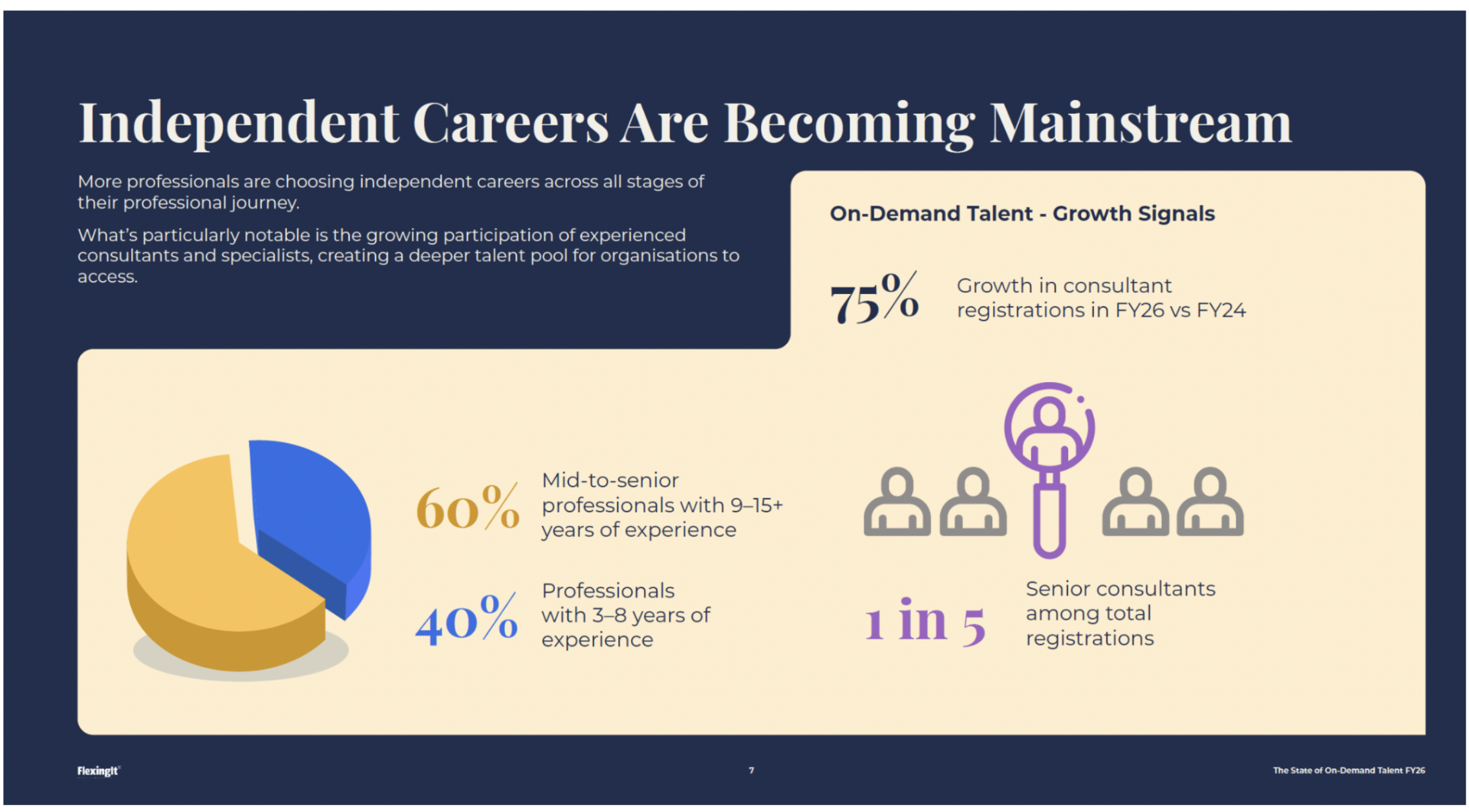
"Independent consulting is no longer something professionals ease into later in their careers. Nearly 40% of new consultants on our platform in FY26 have between three and eight years of experience. This generation is choosing independent work early and by design, drawn by the speed at which they can build diverse skills and garner high-impact experience outside a traditional career track." - — Chandrika Pasricha, Founder & CEO, Flexing It
— Chandrika Pasricha, Founder & CEO, Flexing It
And for businesses, it opens up a wider framework of expertise - drawing in people who have already worked through comparable pressures.
2. Execution Is Drawing More Attention
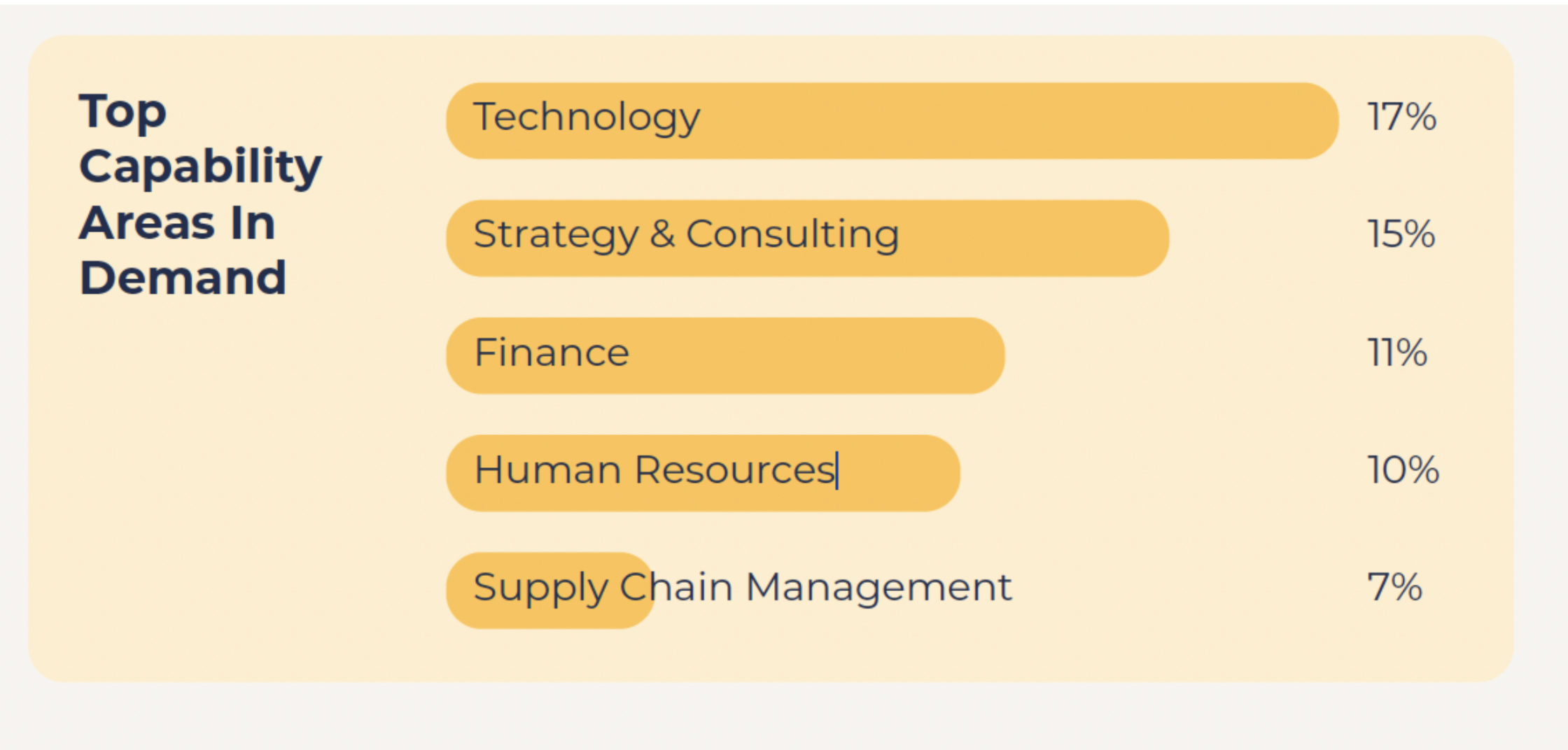
The client demand patterns offer a pulse check on where businesses need expertise most. Strategy remains one of the largest areas of demand, but much of the recent growth sits in functions closer to execution
Top demand areas:
What stands out:
- Supply-chain demand grew 61%
- HR demand grew 23%
These are operational functions.
Their rise in demand may suggest that the bottleneck, for many organisations, lies in finding the people who are experts in delivery.
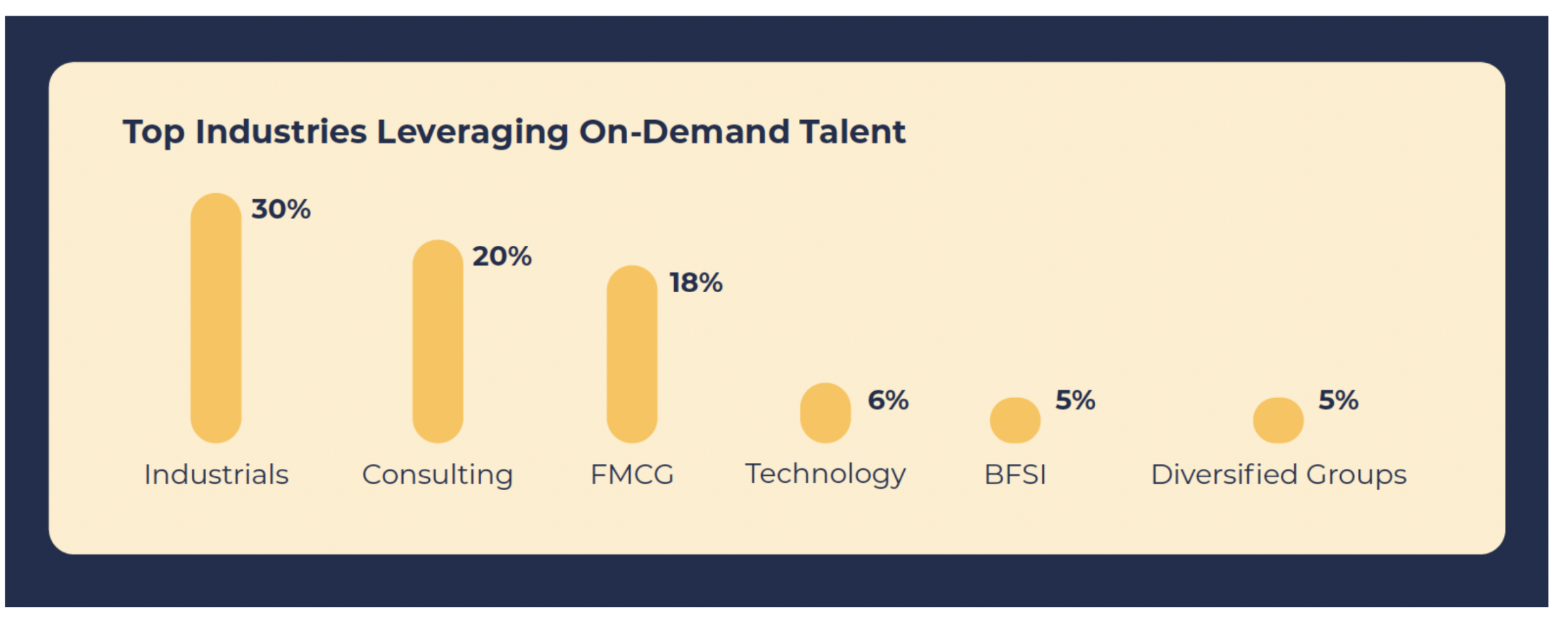
3. Traditional Industries are Flexible-Talent Ready
Top sectors using on-demand expertise:
Many of these sectors are managing multiple pressures at once: operational efficiency, digital adoption, cost control and market expansion.
In such environments, specialist expertise can be useful not only for growth but for continuity.
It may explain why industrials now account for such a large share of demand.
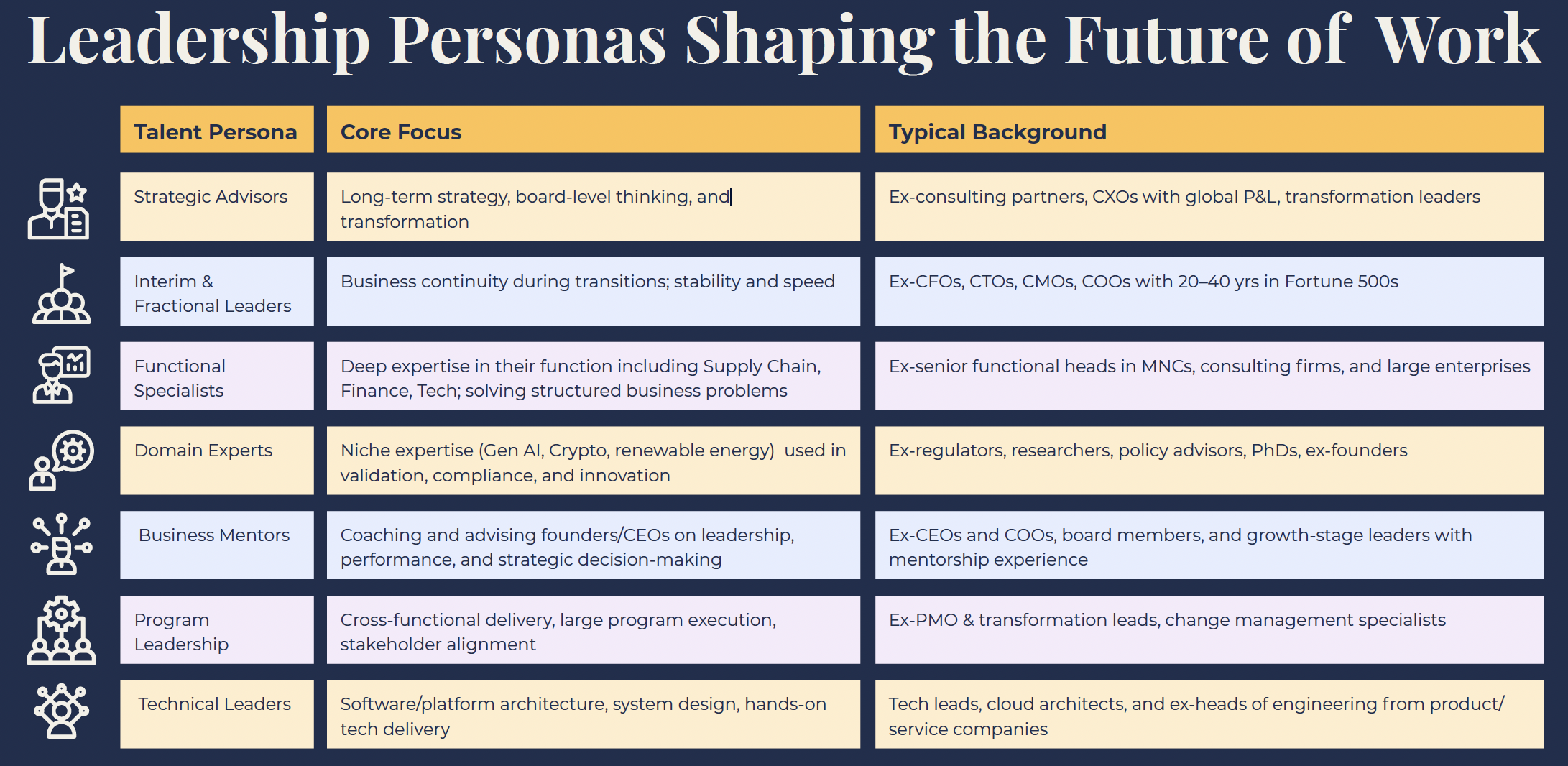
4. Leadership Is Becoming More Situational
In FY26,
- 35% of deployed consultants were senior professionals
- 16% of projects required senior or interim talent
The hiring trends suggest that organisations are becoming more comfortable borrowing leadership rather than owning it. As transformation becomes more project-led, the value often lies in access to someone who has solved a similar problem before, rather than recruiting another executive for the organisation chart.
Representative leadership profiles from client engagements.
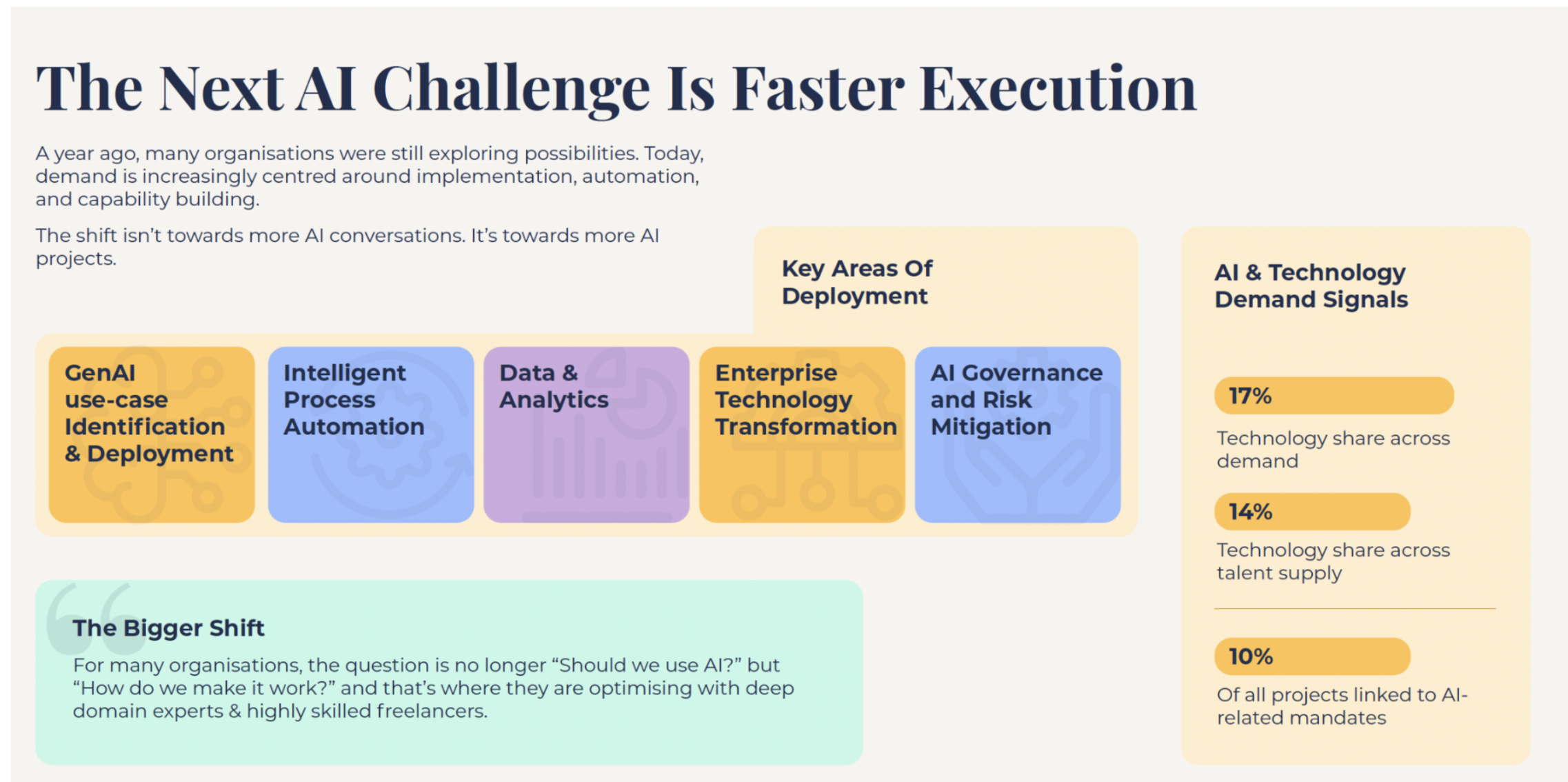
5. AI Has Moved Into Practice
Ten per cent of all projects now include an AI component.
Use cases include
- GenAI deployment
- Process automation
- Data analytics
- AI governance
- Enterprise transformation
For many businesses, trends in IT recruitment are centrally geared towards: How do we make AI implementation at scale?
And in many cases, that requires expertise that may not yet exist within the organisation.
6. Work Is Becoming More Outcome-Focused
Perhaps the clearest takeaway from the report is how on-demand talent is being used.
Not at the edges but often as part of core delivery.
Some key findings:
- 83% of projects require full-time consultant capacity
- 75% are delivered on-site or hybrid
- 56% run for three to six months
Download the full report
What This Means for FY27
Rather than predicting specific numbers, the on-demand recruiting trends suggest core priorities for organisations:
- Workforce models will become more blended, combining permanent employees with independent specialists to improve speed and flexibility
- Flexible access to specialist talent will become a workforce strategy rather than an occasional solution
- AI adoption will enter its next phase, with implementation, governance and business integration taking centre stage with the help of on-demand talent


 `
`  52
52
 0shares